
Incertidumbre
Cómo los líderes de adquisiciones pueden prepararse para lo imprevisto
Octubre de 2026

Intro paragraph
Procurement leaders face a more volatile environment, shaped by economic pressure, geopolitical risk, fragile supply chains and rapid technological change. At the same time, digital tools—especially artificial intelligence—offer new ways to streamline work, sharpen insight and speed decisions. To stay competitive, companies must do more than digitise. They must build procurement functions that are resilient, agile and ready for change.
Main topics in the report
-
Data gaps and weak visibility
Risk is shifting from physical disruption to cyber threats.
Procurement capacity
Technology to strengthen
Procurementʼs risk profile is shifting from physical disruption to digital vulnerability. Cyber-security stands at 22%. Within two years it is projected to lead all risks at 26%.
-
Contracts no longer sit still
Volatility is constant. Prices, terms and volumes now change frequently, replacing fixed agreements.
Moving with the times
Resilience is being engineered
Contracts are increasingly treated as dynamic instruments rather than fixed agreements. Interpret real-time signals, renegotiate terms without destabilising supplier relationships and rapidly rebalance cost, resilience and availability.
-
AI is everywhere, impact isn't
Adoption is high, but workflows remain unchanged. Value is therefore limited.
AI growing pains
Barriers to effective AI
Organisations are trying to deploy AI without changing how decisions are made. The result is shallow integration.
-
Intelligence without insight
Data exists, but visibility beyond tier one is weak, limiting risk management and AI effectiveness.
Visibility ends at tier one
Almost 60% say supplier data beyond tier one is either difficult to access or insufficiently reliable. And 43% say
systems cannot integrate supplier data. While, 35% identify data gaps as a primary constraint on continuity during disruption. -
Lack of process
Authority sits at the centre, but slow workflows and unclear roles drive work-arounds.
The drag on procurement speed
Limits of procurement agility
Most organisations now operate hybrid models (53%), with a further 23% centrally led with local execution.
Goals of the study
● Show how procurement teams are adapting to uncertainty and shifting risks.
● Assess how operating models and systems are changing to improve agility.
● Examine how AI is reshaping workflows, team structure and skills.
● Evaluate whether teams use data well for timely, strategic decisions.
● Understand how leaders support staff and secure buy-in during change.
Start listing relevant data
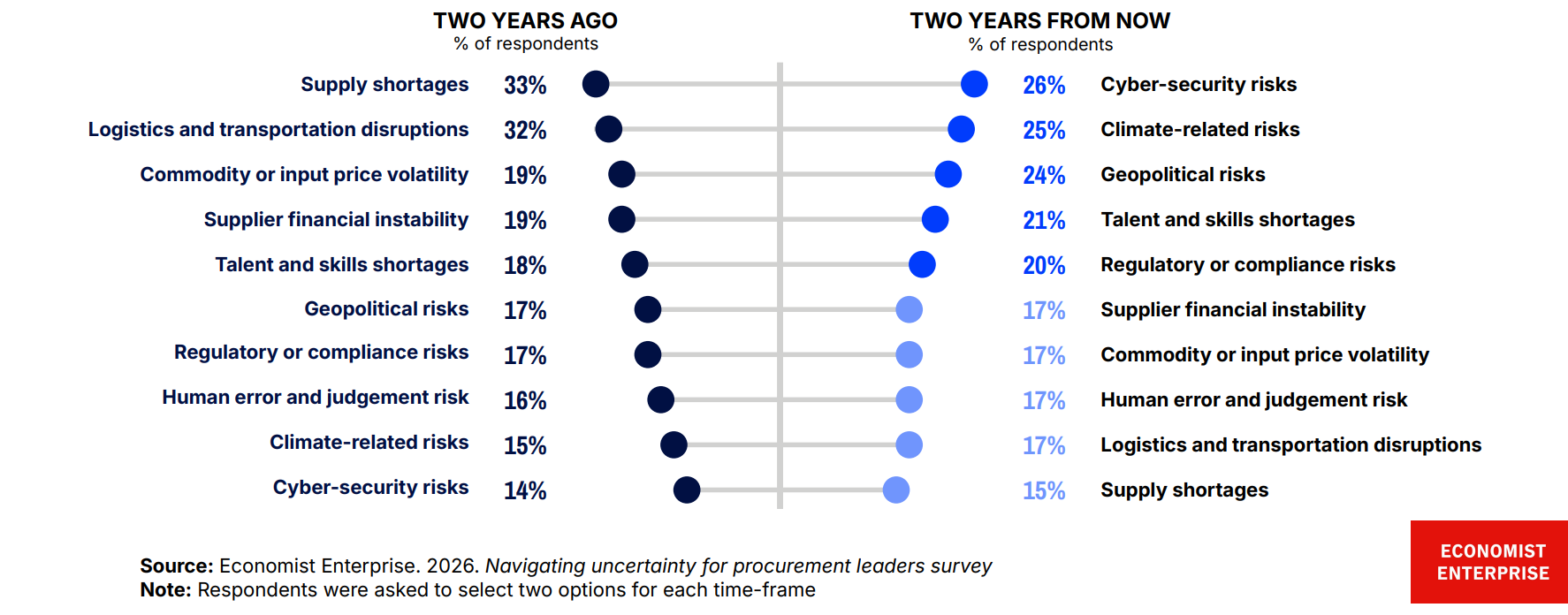
Procurementʼs risk profile is shifting from physical disruption to digital vulnerability. Two years ago cyber-security ranked low (14%), well behind supply shortages (33%) and logistics disruption (32%). Today it stands at 22%. Within
two years it is projected to lead all risks at 26%, ahead of climate (25%) and geopolitics (24%).
Yesterday’s bottlenecks, tomorrow’s breaches
How procurement risk priorities are shifting over time (past vs future)
Interesting quote
Company


-
Everyday savings
Get supplies fast and stretch your budget further with business-only pricing and quantity discounts.
Everyday savings
-
Drive impact
Create lists through Business Giving and let donors send supplies directly to your organization.
Drive impact
-
Broad selection
Enable your team to order what they need, when they need it, within predefined guardrails.
Broad selection
Tax-exemption
Qualified organizations can make tax exemption permissions across the organization through Amazon Tax Exemption Program.

Advanced analytics
Enhance nonprofit spending visibility with advanced analytics and dashboards to track progress across the organization.
Flexible payment methods
Find the right payment option to meet your needs with Amazon Business, such as invoicing.
Systems integration
Connect your existing e-procurement system to Amazon Business using Punchout.




 Estados Unidos
 India
India Reino Unido
 Francia
 Alemania
 España
 Italia
 Canadá
 Japón
Japón México
 Australia


