
Season 2 Episode 7: Powering prosperity through purposeful procurement


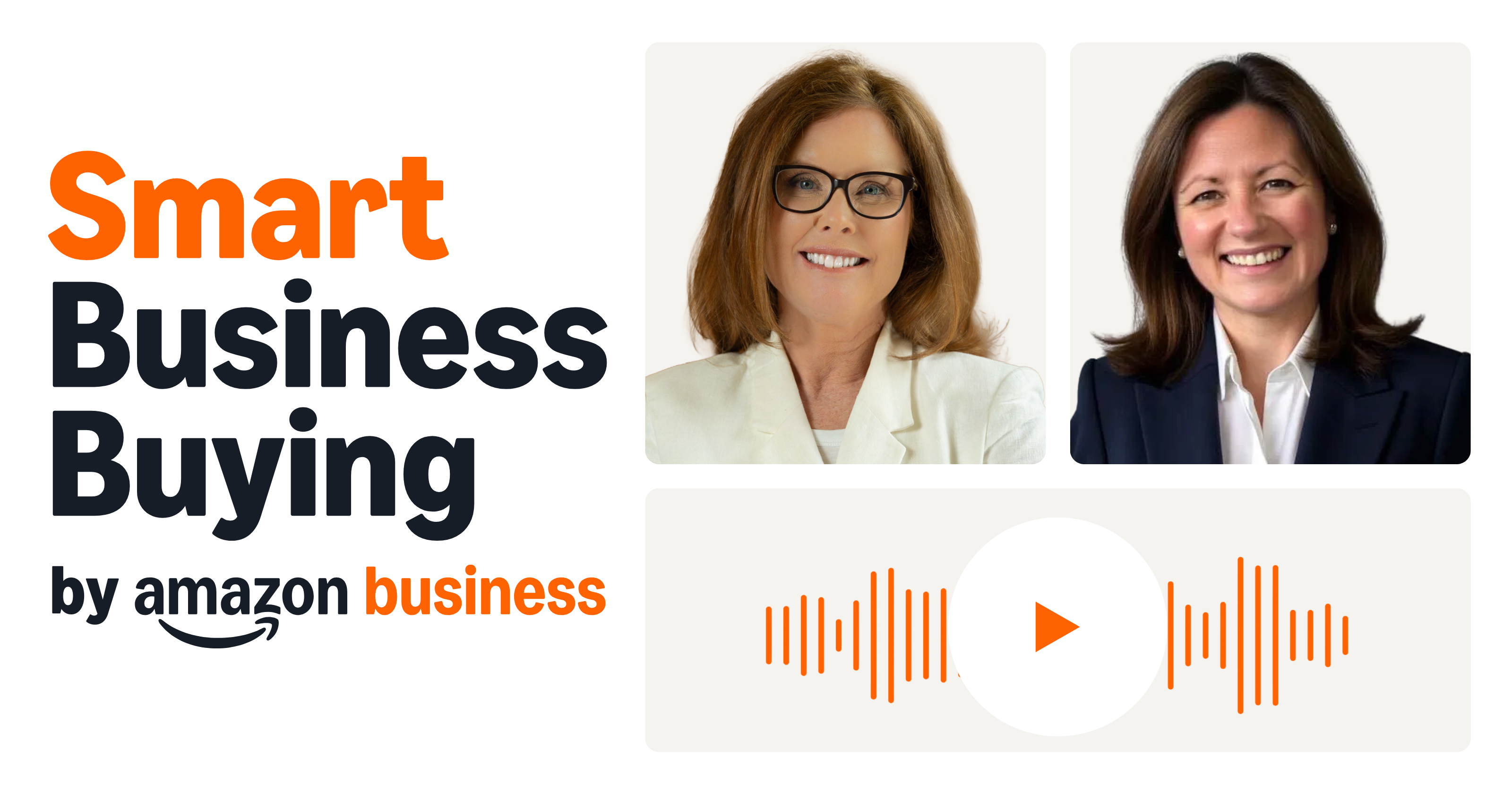
In this season finale of the Smart Business Buying Podcast, Emma Chontos, Chief Procurement Officer, and Kelly Mathis, Director of Procurement at Intuit, share how their internal procurement solution Swift is simplifying processes, empowering employees, and supporting small businesses.
Looking back on the early days
When Emma joined Intuit, she saw an opportunity to elevate procurement into a strategic function that could drive meaningful impact. Reflecting on this transformation, Emma shares, “The goal wasn’t only about how do we elevate the relevance of a procurement function… it was also anchored on how can we have impact at the company level.” This vision led to the creation of Swift, a solution designed to modernize procurement, improve employee experiences, support small businesses, and promote sustainability while aligning with Intuit’s mission of powering prosperity.
Swift’s impact
With Swift, procurement management is faster, more intentional, and more intuitive for Intuit employees. Kelly highlights its success, saying, “Employees tell us, ‘It’s like it knew me.’ I was able to do this in two clicks. There's been thousands of automation efficiency hours delivered.”
Amazon Business supported this transformation by enabling employees to access a wide range of products quickly and efficiently. It helped Intuit provide essential work-from-home supplies, showcasing the importance of flexible and reliable procurement options.
Supporting small businesses and climate-friendly sellers
Intuit’s procurement strategy also reflects its commitment to small businesses and sustainability. By prioritizing small and climate-friendly suppliers, many of whom are also Intuit customers, the company ensures its procurement decisions create a positive ripple effect, benefiting both the company and the broader community.
Key themes from Emma and Kelly’s conversation:
- Transforming procurement to align with Intuit’s mission
- Swift’s role in simplifying processes and empowering employees
- How Amazon Business supports Intuit’s goals for small businesses and sustainability
Listen and subscribe now
Transcript:
This has been lightly edited for clarity.
[00:00:24 - 00:00:55]
Brit:
Welcome to the Smart Business Buying Podcast. I'm your host, Brit Moorer. On today's inside scoop, we're joined by Emma Chontos, Chief Procurement Officer and Head of Global Sourcing and Procurement, and Kelly Mathis, Director of Procurement from Intuit, to explore how they're leading with purpose in procurement.
We'll learn how their innovation led to Swift their front door for procurement and why choosing who they buy from matters not just for Intuit, but for small businesses and sustainability. Kelly and Emma, so excited to chat with you both.
[00:00:55 - 00:00:56]
Emma:
Thanks for having us, Brit.
[00:00:56 - 00:01:05]
Brit:
Before we dive into things, I'd love for listeners to sort of get a sense of your roles at into it and how they connect to the company's overall mission.
Emma, why don't we hear from you first?
[00:01:05 - 00:01:53]
Emma:
I had the privilege of joining Intuit as their first Chief Procurement Officer, gosh, seven years ago now.
And for me, the mission wasn't only about how do we elevate the relevance of a procurement function, and that was going from transactional to strategic, but it was also anchored on how can we have impact at the company level?
And so it was very strongly, connected to, into its mission, and that was by supporting small businesses and our ecosystem and driving sustainability and really improving employee experience. And, you know, through that and through very intentional procurement, we've probably delivered, Kelly, I want to say, almost like 530 million in annual economic impact. And that's all been tied to the decisions procurement has made and driven across the company.
[00:01:54 - 00:02:41]
Kelly:
And, Brit, thanks for having us today. I'm Kelly, I'm part of Emma’s leadership team. I lead procurement, travel and expense and supplier engagement.
Everyone at Intuit, not just in my role, but all of us, we get to work on our mission of powering prosperity around the world. And for us, that means how do we use our strategy? We want to be an AI driven, expert platform, and that's delivering for our customers and small businesses. But it's delivering for our own employees, too, and how we unlock their productivity.
That's why we're so excited to be with you today, talking about the Amazon Business relationship, because you've really been with us on this journey to not only deliver those employee experiences, but also how do we be intentional in directing spend to small and climate friendly sellers?
[00:02:41- 00:02:53]
Brit:
I love that. I mean, you both clearly built something that's purpose driven and connected to into its mission. I imagine it didn't start there though, right? So what was procurement like when you first joined into it?
[00:02:53 - 00:03:44]
Emma:
Well, for me, you know, I had spent most of my career in media and entertainment. So this was my first foray into a fintech company.
And at Intuit, you know, we were growing exponentially and we were actively acquiring companies such as Credit Karma, MailChimp, however, you know, our infrastructure had not kept pace. And so we were just not positioned to scale.
To me, I found that really exciting. And part of why I joined Intuit, because it was this fantastic opportunity to, like, leapfrog from where we were to where we are.
And so we were really unconstrained and we could design a platform that was fit for purpose. And so, you know, with my leadership team, we really looked at how do we leverage the best of breed technologies, where do we want to build ourselves? And it really allowed us to reinvent the entire source to report landscape.
[00:03:44 - 00:03:53]
Brit:
Wow. And Kelly, do you have a take on that? I mean, it sounds like there was just a lot to tackle, in the beginning, from the start. Curious to know your perspective?
[00:03:53 - 00:04:34]
Kelly:
Emma's absolutely right. I mean, we're lucky we're in an organization that is in high growth mode, and not just now, but for many, many years, we've been scaling, even when I think back to five years ago, roughly five years ago, when we installed our P2P platform, and I think about where we are today, we've doubled our workforce.
The third party spend that we're managing. And in so many ways, while we leapfrogged in installing that P2P platform, we still heard employees coming to us telling us like, why can't this be as easy as shopping online? And so we knew there was a real desire and appetite for something that was a more commercial grade solution.
[00:04:34 - 00:04:42]
Brit:
Now, as things were getting off the ground, did you know from the start what success would look like, or has that vision sort of evolved over time?
[00:04:42 - 00:05:54]
Emma:
Every company I've ever been at has started with the vision of having an organization that is easy to work in and easy to work with. And, you know, that really means you've got to be like a friction buster in order to free everyone up to do their best work.
I mean, that's what it's all about, is how can we make sure that folks are doing the best work of their lives? So it's always been about prioritizing what's most important. And that's in order to drive like value innovation, risk, resilience. However, you know, it has absolutely evolved over time. And what began as an efficiency and automation journey really became a broader transformation around data, AI and ecosystem value.
So while the end goal was like, let's have strategic impact, that's never changed. It's all around impact in our organization. But how we define and measure success has really matured as we learned to automate and build credibility across the enterprise. And, you know, with things moving so quickly now, there are things that we couldn't do a year ago that we're now doing today.
And I think that's what really makes it exciting to be in the procurement space right now.
[00:05:55- 00:06:10]
Brit:
I want to dive into some of that. he transformation in technology, all of this evolution makes sense. So let's talk about one of the biggest results of this transformation.
Right? Swift. What challenges were you trying to solve. And maybe give us a little snippet of what Swift is a little bit.
[00:06:10 - 00:07:57]
Kelly:
You're absolutely right. We had a best of breed solution suite. We had installed our P2P platform, we had our third party risk management solution, we had our travel and expense platform, but we recognized we needed to find a way to connect them together.
It was really, you know, our ethos was this idea of agility without compromise. That was something we used to talk about when we were speaking. How do we make this faster and with velocity for our employees? We continue to grow. I mean, not just in the last year, but the last several years. There's been 30% growth, and yet our headcount is flat.
And I think about an era even five years ago when we were all, grappling with the pandemic, we needed to find a way to quickly mobilize employees to work from home. And that was really the catalyst for our relationship with Amazon Business that allowed us to get employees, computer peripherals and other kinds of work from home supplies quickly.
All of that to say that the P2P platform, while it was a leap forward, there were still things about the experience that we could optimize. It was still taking 20 clicks to go from your P2P platform punching out to Amazon business, checking out, coming back to our P2P platform, sometimes being fraught with, issues like I shipped it accidentally to the office instead of my home, and it drove things like 32% of our helpdesk tickets, all related to catalog confusion.
So while we were so proud of everything we installed with these solutions, it was really the moment in time when we needed to orchestrate them together. And that was swift. Swift gave us the ability to simplify and guide this process for employees.
[00:07:57 - 00:08:10]
Brit:
Sounds like a massive change to the everyday for your employees. Can we dive into that a little bit more?
So once Swift launched, how did it actually change employee experiences for purchasing?
[00:08:11 - 00:09:00]
Kelly:
Oh, it's brought unprecedented benefit. I mean, we launched our Swift expense and Swift buy. These are our solutions that are related to recurring expenses and catalog shopping. We launched those in the last six months, and it's already facilitated thousands of transactions.
The thing that I get excited about, though, is that employees tell us it's like it knew me.
I literally was able to do this in two clicks.
There's been thousands of automation efficiency hours delivered. Our CSat is up 32 points to 88. We've had user adoption of 58% and growing. And you know from an operations perspective it's meant faster cycle times, more compliant transactions, which ultimately is helping our spend under management.
[00:09:01 - 00:09:09]
Brit:
That's really impressive. Emma, I know you talked about that this was a moment where employees could really feel like they got an experience they asked for, right?
[00:09:09 - 00:10:21]
Emma:
We build product in our company and, and one of the key things that our engineers always strive for is you've got to create something and make it sticky, right?
You've got to create something where they keep coming back and using it constantly. And I think this was as as simple as managing expenses is we made it sticky and making it easy for them just to come back and use it consistently. And and I was just saying to Kelly, just before we, we jumped on, you know, for me it was just like, I'll be honest with you, it was a chore.
I would hesitate to go buy something online. There was just too many. You had to demystify it. It wasn't intuitive. And, you know, at the weekend, I needed my ink cartridges. It was three clicks. And Amazon Business delivered it the next day. And these are stories that we're hearing and hearing.
And again, it is as small as it may seem. It is really freeing up our employees time. And when we think about all the engineers, we have thousands of engineers at Intuit. We want them focusing on product. We don't want them trying to work out, how do I buy something? How do I onboard somebody? So I think those are some of the things. And we're giving back the time and removing friction.
[00:10:22 - 00:10:32]
Brit:
A piece of that, it sounds like it's more than just about transactions, right. So I'm curious, how does that philosophy show up in how you all support small businesses?
[00:10:32 - 00:12:04]
Emma:
You know, obviously I'm very passionate about procurement. I know Kelly is too.
I see our role, we always call our role, we're like air traffic controllers of the business, right. We connect the dots across spend suppliers, employees. We know a tremendous amount. And we have those insights, and the source of truth of expense across our ecosystem. So we've always had this philosophy of, being anchored on it's got to be a win, win. It's got to be, you know, a great win, win, approach with our suppliers and our partners in good business should make sense for everyone.
And so, you know, that really translated to how we prioritize small business suppliers who, by the way, you know, 62% of them are actually also our customers. So, you know, we've been this is in our core. This is what we do. And you know, we've developed initiatives like the prompt pay, playbook in the US, the Fair Pay in the UK, And these are really around how do we have others support small businesses early.
And, you know, in the last decade we've been paying net ten, to our small businesses, which is critical for cash flow and access to capital. And, you know, when they succeed, our customers succeed. So we've really anchored on what's core to Intuit's business, which if we're not the best place for small businesses to thrive, I don't know who else is.
And I think that connection is really embedded throughout our organization.
[00:12:04 - 00:12:18]
Brit:
Sounds like a powerful way to really think about procurement more as a lever for impact. Kelly, kind of building on that, what kind of external impact are you seeing from Swift, and how has partnering with Amazon Business really help operationalize that vision?
[00:12:19 - 00:13:24]
Kelly:
Well, just as Emma said, for us, we always knew what success look like in this space for ourselves and being able to solve small businesses pain points like accelerated payments, being a vehicle for, solving access to capital.
But that for us wasn't where the work stopped. We always wanted to be able to share this approach more broadly, externally, and create that growth and flywheel for other like-minded organizations. And when I think about us and our utilization of Swift and the partnership with Amazon business, I mean, you share the same ethos. It's like, how do we be intentional and direct spend to small and climate friendly sellers who share our values and our beliefs?
I think about work that my team has done to hand select small and climate friendly sellers who sell our 30 plus standards and our IT space, and I am not surprised to see continued growth in the spend and economic impact that we've been able to deliver as a result of that.
[00:13:25 - 00:13:34]
Brit:
Wow, that's super impressive. Let's dive in a bit more into the solutions and how some of the Amazon Business features are being used, how they've made a big difference for your team. I'm curious.
[00:13:35 - 00:14:42]
Kelly:
Emma can tell you more in a moment. She's got this great perspective around great AI and automation initiatives like what we've been delivering with Swift. They all start with great data. And I think that's what Amazon business and into it should be the most proud of, is the way that we've pioneered this new territory, with what data elements we need you to pass through to us, through the APIs, into Swift.
And I know that that sounds easier said than done, but in accomplishing that, it's been an unlock. You know, when people experience Swift catalog, they are seeing the way it is sorted and the way that they search. It's directing them specifically to small and climate friendly sellers and that curated experiences, not just from a supplier engagement perspective, good for small businesses, but from an employee experience perspective.
It's really helped employees find, even easily find variations like iPhone cases. There was a lot of work to be done in the data elements between Amazon Business and Intuit to address that.
[00:14:42 - 00:14:54]
Brit:
Who would think there's so many options, right. So it's great having solutions that kind of narrow that down for everybody.
I'm curious, Emma, what's something you're looking forward to as this collaboration with Amazon Business continues?
[00:14:55 - 00:15:51]
Emma:
Well, we've set a bold goal and that is that by 2030, 70% of procurement processes will be automated. That's our goal. And so that really is going to be mean that we're going to lean into our partnerships like with Amazon Business. We're going to be looking at how do we create more catalogs. How do we make buying effortless.
It's moving from, as Kelly said, the 20 clicks to the three clicks. And so for us, it's going to be about how do we move beyond where we are today. And we have we've built this great foundation, we've learned a lot building this foundation. And it's how do we evolve Swift into a true single front door. And that's for every procurement need, whether it's requests, tracking, third party risk and invoices.
So the goal really is to have that all in one place. And, you know, that's where we're going to continue our relationship with Amazon Business to be on that journey with us to our goal at 2030.
[00:15:52 - 00:16:09]
Brit:
Wow, that sounds amazing. And I think that's the point of it all, right? It's a journey together. We're in this together to make sure we're constantly innovating. You tell us you need something and we find a way, right?
Kelly, what's next? What's on the horizon when it comes to smart business buying at Intuit?
[00:16:10 - 00:17:08]
Kelly:
It sounds cheeky, but I think the possibilities are limitless, honestly. I mean, we definitely want to scale Swift to 80% adoption, which is about 14,000 users within the walls of into it.
But when I think about expanding Swift's capabilities and orchestrating all of our purchasing experiences, it's really going to come down to services purchasing. And so while it might not be two clicks, we do aspire for it to be something like three clicks to be guided and purchasing from your preferred suppliers. We also plan to integrate things like contract lifecycle management, which is going to be a huge unlock and a for us in terms of powerful insights behind our, almost $8 billion of spend and then all expense, you know, in FY 25, we delivered swift recurring expense, which focused on internet and mobile reimbursement.
And so we do plan to build that out to cover all Picard travel and expense transactions.
[00:17:09- 00:17:18]
Brit:
Between the both of you, I know you're so passion driven. This is your jam, right? You're really excited about these initiatives and all of the projects you've been able to spearhead.
[00:17:19 - 00:17:22]
Emma:
You can tell that?
[00:17:23 - 00:17:48]
Brit:
Yes, yes, which is exciting to hear about because you've been able to create so many initiatives to help, not just Intuit, but the folks who are using Intuit and small businesses. And, I think when there's purpose behind something, right, you can really feel it.
If there's just one piece of advice or a takeaway that you could give to others who are kind of looking to improve their procurement strategy, what would that be?
[00:17:49 - 00:19:03]
Kelly:
I will say Swift. Well, I've said all these great things about it. It's not going to brew your coffee and cook your breakfast for you. And you know, it's not been without bumps along the way.
And so I would just say that when you're pioneering a new frontier like that, expect to learn a lot. But at the same time, celebrate and embrace the fact that you get to be that map maker. And I love that as a kind of motto for our team. I'd also encourage folks to just think about simplification, like before jumping into Swift and any of our other AI powered or automation solutions.
It was about simplifying our process. And how do we optimize our process and our policies.
Maybe the last thing I would mention, I know you asked for one, but can I give you three, we all read the MIT report, or you've at least heard about it over the last several weeks that talked about enterprise AI initiatives.
And one of the things that stuck with me about that is that sometimes these AI initiatives, they fail because they have no connection to financial benefit. And that's why we get so excited and we feel like we're operating in rare error when we talk about Swift, because there is unprecedented benefit that it's delivered for us.
[00:19:03 - 00:20:05]
Emma:
We're in such an unprecedented time right now. Right. So I would say it's so important to bring your team along the journey and celebrate the wins along the way and also the failures. You know, we came at this with, it's okay if your if your performance dashboard is red because you're challenging yourself, it's it.
You learn from it and you iterate and you move on. And finally, I would probably say, you know, transformation doesn't happen all at once. It is definitely a journey. And, you know, I know there is so much FOMO out there, in regards to AI, and I think we all feel it like it's not happening quick enough.
But my advice is start small, experiment and focus on targeted intentional wins. And I think that's where you start. But but bring the team along the journey with you. I think that is the key thing. And that was some of the secret of our success. We did it as one team.
[00:20:06 - 00:20:19]
Brit:
Can't wait to see what happens here about how this journey continues. It's been super interesting and thank you both so much for joining us and sharing your insights and story today. It's been great.
[00:20:19- 00:20:20]
Emma:
Thank you, thank you.
[00:20:20 - 00:20:21]
Kelly:
Thank you so much, Brit.
[00:20:22 - 00:20:32]
Brit:
Of course.
If you enjoyed this episode and want to stay up to date, make sure you subscribe to wherever you tune in for your podcast. If you want to learn more about what you just heard, visit amazonbusiness.com/podcast
Was this helpful?




 United States
 India
India United Kingdom
 France
 Germany
 Spain
Spain Italy
Italy Canada
 Japan
Japan Mexico
 Australia


